Tree Trimming & Pruning in Wellington, FL — What to Know First
Tree trimming in Wellington, FL is routine care, not a one-time fix. South Florida trees grow fast, and a canopy that was in good shape last year can be over a roof, rubbing a fence, or blocking light by this year. Regular trimming keeps a tree healthy, reduces wind load before hurricane season, and keeps branches clear of roofs, driveways, lanais, and power lines. Done well, trimming improves airflow through the canopy, removes dead and crossing limbs, and helps a tree keep a strong, balanced shape.
Good pruning is selective. It is not the same as topping a tree, cutting it back to stubs, or shearing it into a round shape. Topping creates weak regrowth, invites decay, and makes a tree more dangerous in a storm, not less. A proper Wellington trim removes dead wood, limbs that cross and rub, limbs that are too low over a driveway or walkway, and growth that is crowding a roof or a neighbour's property, while keeping the tree's natural form. For most Wellington homes, trimming once a year, or before storm season, is a sensible routine, with fast-growing species sometimes needing more frequent attention.
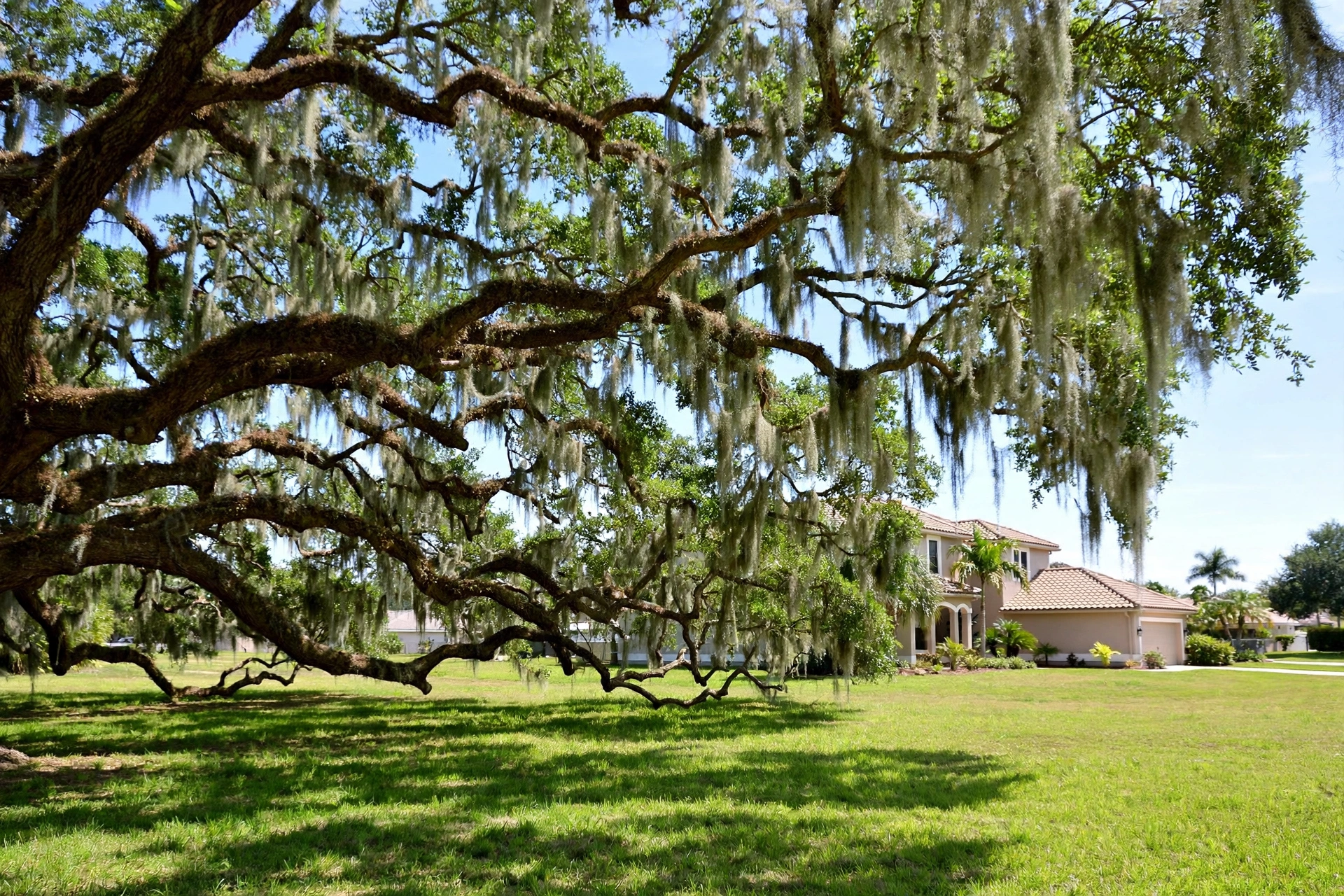
Wellington's mix of trees means trimming is not one-size-fits-all. Live oaks need careful canopy work and clearance, not heavy reduction. Palms need a different approach entirely, and are covered on the palm care page. Pines, ficus, and other shade trees each have their own growth habits, and a crew that understands the species will prune for that tree's structure rather than applying the same cut to every tree on the property.
When to Choose This Service in Wellington
Choose tree trimming in Wellington when branches are touching or overhanging a roof, when dead limbs are visible in the canopy, when a tree blocks a driveway, walkway, or streetlight, or when you want to reduce storm risk before hurricane season. Trimming is also the right call when a tree is healthy but overgrown, when fruit or seed drop is creating a mess over a pool or patio, or when you want more light into a yard without removing a tree you like.
Trimming is the right answer when the tree itself is sound. If the trunk is hollow, the tree leans badly, or large limbs keep failing, trimming may not be enough, and an assessment should consider removal instead. Do not wait until a branch is already on a roof to book a trim. A pre-storm trim in late spring is far cheaper and calmer than an emergency call after a storm, when crews are booked and prices and wait times rise.
How the Work Is Done
- The crew walks the property and identifies each tree, its species, and what needs to come off: dead wood, crossing limbs, low limbs, and clearance work.
- They plan the cuts so the tree keeps its natural shape, removing no more than is needed, and avoiding topping or heavy reduction that weakens the tree.
- Work is done from the ground, by climbing, or from a bucket truck, depending on height and access, with a ground crew managing falling limbs and debris.
- Debris is chipped or hauled away, and the crew checks that branches are clear of roofs, fences, driveways, and wires before leaving.
- The crew should leave you with notes on what was done and what to watch for next season, such as regrowth, dead wood returning, or a limb that will need attention next year.
What Affects the Cost in Wellington, FL
Trimming cost in Wellington is driven by the number of trees, their height and canopy size, and how much needs to come off. A single small ornamental tree is a very different job from a large live oak with a wide canopy over a house. Access matters as well: a tree a bucket truck can reach from the street is quicker to trim than a tree in a fenced backyard where a climber must work and debris must be carried out by hand.
Species and condition also change the price. A tree with a lot of dead wood takes longer to clean than a healthy tree that just needs shaping. Palms are usually priced separately from hardwoods, because palm work is a different job. Haul-away and clean-up should be confirmed in the quote, so you are not left with a pile of limbs in the driveway. As with removal, a free on-site quote is the only reliable price for a large or multi-tree job.
No fixed price is quoted here. A free on-site assessment is the only reliable way to price this work, because two trees that look similar from the street can be very different jobs once height, access, and what sits underneath are taken into account.
Wellington-Specific Notes
Wellington's equestrian properties and large lots mean trimming is often about clearance and safety, not just appearance. Branches over paddocks, barns, and fence lines need to be kept clear so horses and riders are safe, and large oaks that shade turnout areas need regular dead-wood removal. In residential neighbourhoods, the common Wellington trimming jobs are clearance over roofs and driveways, keeping branches off pool cages, and reducing wind load on large oaks before hurricane season.
HOA communities in Wellington often have rules about street trees, front-yard trees, and the timing of work, and some require approval for major pruning. Check your HOA's rules before a large trim, especially for a street tree or a tree that is visible from the road. A tree on a shared boundary should be discussed with a neighbour before major work, even if the limbs are on your side, because the tree itself may be shared.
Safety, Permits, and HOA Notes
Never trim near a power line yourself, and do not climb a large tree with a chainsaw. Power lines, hidden decay, and falling limbs make tree work dangerous, and a fall from a ladder into a canopy is a common cause of serious injury. If a limb is touching or near a power line, contact the utility before any work begins.
Do not top a tree, and be wary of any crew that suggests topping as a routine solution. Topping creates weak, fast regrowth and decay, and it can make a tree more likely to fail in a storm. Ask any crew you hire for proof of insurance and, where applicable, licensing, and verify those credentials yourself. This site does not claim a specific crew's credentials — that check is yours to make before work starts.
Frequently Asked Questions
How often should trees be trimmed in Wellington?
For most homes, once a year, or before hurricane season, is a sensible routine. Fast-growing species and palms may need more frequent attention, while a slow-growing, healthy oak may need less. An annual walk-through with a crew is the best way to set a schedule for your property.
Is topping a tree a good idea?
No. Topping cuts a tree back to stubs, which produces weak regrowth, invites decay, and makes the tree more dangerous in a storm. Proper pruning removes selected limbs while keeping the tree's natural shape and strength.
When is the best time to trim in Wellington?
Late spring, before hurricane season, is a good time for storm-preparation trimming. Dead wood can be removed at any time of year. Avoid heavy trimming during a storm warning, when crews are focused on emergency work and conditions are unsafe.
Can trimming reduce storm damage?
Yes, when done properly. Removing dead wood, thinning a dense canopy, and clearing limbs from roofs reduces wind load and the chance of a limb failing. Trimming does not make a tree storm-proof, and a diseased or structurally weak tree may still need removal.
Do I need HOA approval for trimming?
It depends on your community. Many Wellington HOAs have rules for street trees, front-yard trees, and major pruning. Check your HOA's rules before a large trim, and get approval in writing if your HOA requires it.
Get a Free Quote for This Service
Tell us about the tree, where it is in Wellington, and what you need. Use the quote form on the homepage and choose this service, or describe it in your message.