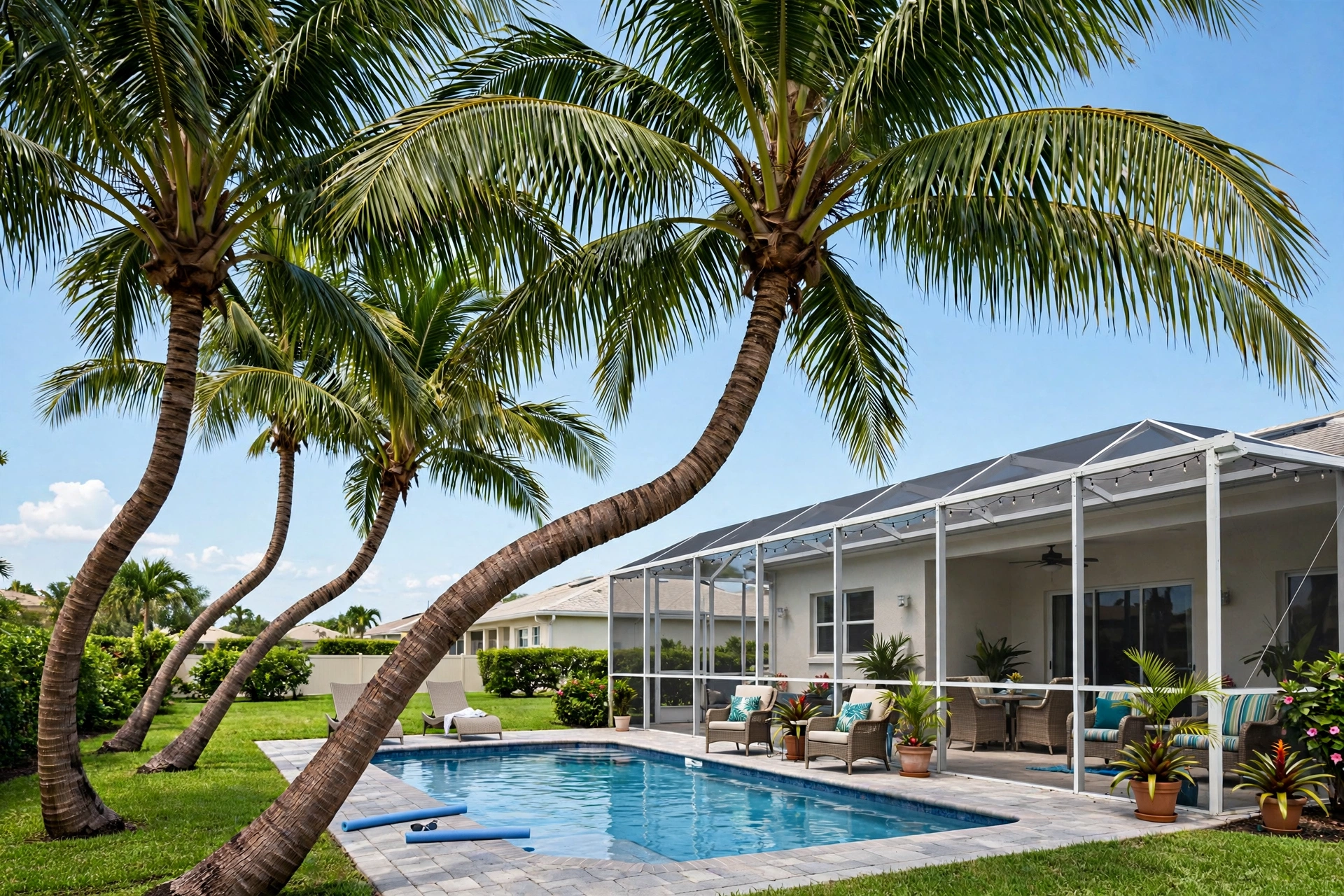
Palm Tree Care in Wellington, FL — What to Know First
Palms are everywhere in Wellington, and they are not like other trees. A royal palm, a coconut palm, a sabal palm, and a queen palm all grow differently, need different care, and fail in different ways. Palm care in Wellington, FL means knowing which palm you have, what it needs, and what it does not need. Palms do not have branches in the way an oak does. They have a single growing point at the top, called the heart, and if that heart is damaged, the palm usually does not recover. That is why palm trimming should be careful, selective, and done by someone who understands palms, not by someone who treats a palm like a hardwood tree.
Palm trimming in Wellington usually means removing dead fronds, old seed pods, and loose boots, the fibrous bases left where old fronds were attached. Dead fronds are heavy, they can fall without warning, and they make a palm look untidy and invite pests. Seed pods, especially on coconut and queen palms, drop fruit and seeds that stain driveways, clog pool filters, and create a slipping hazard on patios. A good palm trim removes what is dead or a problem, and leaves healthy green fronds alone. Over-trimming a palm, sometimes called hurricane cutting, weakens it, makes it more likely to fail in a storm, and is a sign of a crew to avoid.
Palm removal is a separate job from palm trimming. Palms can be very tall, very heavy, and planted close to pools, lanais, and houses, so removal needs controlled lowering, not felling. A palm that is dead, leaning, or damaged at the base, or a palm that has outgrown a small space and is dropping heavy fronds over a pool, may need to come out. A palm that is healthy but just needs a trim should not be removed, and a crew should tell you which one you have.
When to Choose This Service in Wellington
Choose palm trimming in Wellington when dead fronds are hanging, when seed pods are dropping over a pool, driveway, or patio, when a palm looks untidy, or when you want a pre-storm tidy-up. Choose palm removal when a palm is dead, when the trunk is cracked or leaning badly, when the growing point at the top is damaged, or when a palm is so close to a structure that its fronds or falling fruit are a constant risk and trimming cannot solve it.
Watch for warning signs that are specific to palms. Lethal bronzing, a disease that affects several palm species in Florida, can cause fronds to discolour and drop, and a palm that is declining quickly should be assessed promptly, because a dead palm becomes a hazard and, in some cases, a source of disease for nearby palms. Nutrient deficiencies, such as potassium deficiency, show up as yellowing or spotting on older fronds, and are a different problem from storm damage. A crew that can tell the difference will save you from paying for a trim when the palm actually needs treatment, or a removal, and vice versa.
How the Work Is Done
- The crew identifies the palm species and checks the trunk, the crown, and the growing point at the top.
- For trimming, they remove dead fronds, seed pods, and loose boots, working carefully around the heart of the palm and leaving healthy green fronds in place.
- For removal, they plan a controlled take-down, cutting the palm in sections and lowering each piece, especially where the palm is close to a pool, lanai, or house.
- Debris, including heavy fronds and seed pods, is collected and hauled away, and the crew checks that the pool, lanai screens, and driveway are clear before leaving.
- If a palm is removed, the crew should explain what happens to the stump and root ball, and whether stump grinding or fill is included in the quote.
What Affects the Cost in Wellington, FL
Palm care cost in Wellington is driven by palm height, species, and the number of palms. A short sabal palm in open ground is a quick trim. A tall royal palm over a pool, with a full crown of dead fronds and seed pods, takes longer, needs more careful lowering, and produces more debris. Coconut palms often cost more to maintain than other palms, because their fruit is heavy, their seed pods are large, and their fronds are long and heavy when they fall.
Access is a major factor for palms, because many Wellington palms are planted inside fenced pool areas, close to lanais, or in narrow side yards. A palm a bucket truck can reach from the street is quicker to work on than a palm a climber must reach inside a pool cage. Removal costs more than trimming, and the price should list whether debris haul-away, seed pod clean-up, and stump work are included. A free on-site quote is the only reliable price for tall palms or for a property with many palms.
No fixed price is quoted here. A free on-site assessment is the only reliable way to price this work, because two trees that look similar from the street can be very different jobs once height, access, and what sits underneath are taken into account.
Wellington-Specific Notes
Wellington is a palm town. Royal palms line driveways and entrances, coconut palms shade pools and patios, and sabal palms, Florida's state tree, appear in landscapes across the village. That mix matters, because each species has different needs. Royal palms grow tall and straight, and their fronds and seed pods are heavy when they fall. Coconut palms drop fruit that can damage a car or injure a person, and their fronds are a particular risk over a pool. Sabal palms are hardier and slower-growing, but still need dead fronds and seed pods removed.
Equestrian properties in Wellington often have palms along fence lines, driveways, and barn entrances, where a falling frond is a risk to horses as well as to people. HOA communities often have rules about palm trimming, especially for street palms and palms in front yards, and some require approval for palm removal. Check your HOA's rules before major palm work, and do not remove a palm on a shared boundary without checking ownership first.
Safety, Permits, and HOA Notes
Never climb a palm with spikes if you can avoid it, and never let a crew spike a palm that is meant to stay. Spikes wound the trunk, invite disease, and can damage the growing point. A palm that is to be kept should be worked from a bucket truck or by climbing with a harness that does not wound the trunk. If a palm is to be removed, spiking is less of a concern, but the crew should still work safely around power lines and pool cages.
Do not over-trim a palm. Removing healthy green fronds, or cutting a palm back to a few fronds, weakens it and makes it more likely to fail in a storm. A good palm trim leaves a full, rounded crown of healthy fronds. Ask any crew for proof of insurance and, where applicable, licensing, and verify those credentials yourself. This site does not claim a specific crew's credentials — that check is yours to make before work starts.
Frequently Asked Questions
How often should palms be trimmed in Wellington?
Most palms benefit from trimming once or twice a year, depending on species and location. Palms over a pool or driveway, and coconut palms that drop fruit, usually need more frequent attention than a sabal palm in open ground. A crew can set a schedule based on your palms and your property.
What is hurricane cutting, and is it a good idea?
Hurricane cutting means removing most or all of a palm's green fronds, leaving only a few at the top. It is not a good idea. It weakens the palm, makes it more likely to fail in a storm, and is a sign of a crew to avoid. A proper palm trim removes dead fronds and seed pods and leaves healthy green fronds in place.
Can a palm recover if its top is damaged?
Usually not. A palm has a single growing point at the top, and if that heart is damaged, the palm will usually decline and die. That is why palm work should be careful around the crown, and why a damaged palm should be assessed promptly.
Should I remove a palm or just trim it?
Trimming is right if the palm is healthy and the problem is dead fronds, seed pods, or appearance. Removal is right if the palm is dead, leaning badly, damaged at the base or crown, or so close to a structure that trimming cannot make it safe. An assessment should give you both options where both are safe.
What happens to the palm stump after removal?
Palm removal and stump work are usually priced separately. Ask whether stump grinding, root ball removal, and fill are included in the quote, and what the area will look like afterwards, especially if you plan to replant or lay sod.
Get a Free Quote for This Service
Tell us about the tree, where it is in Wellington, and what you need. Use the quote form on the homepage and choose this service, or describe it in your message.